Bath tech scene analysed in techSPARK report

techSPARK has released its inaugural Chair’s Report, offering a comprehensive overview of the current state of the Bristol and Bath tech scene.
The report acknowledges recent progress, boasting an impressive count of over 1,200 businesses in diverse fields such as fintech, greentech, digital, cyber and deeptech.
It also addresses the challenges arising from the region’s growing maturity and explores avenues for improvement.
The report emphasises the importance of policymaking, political leadership, investment diversity and venture capital funding as key areas for consideration, highlighting the need to strengthen the collaborative culture and bridge the gap between competition and collaboration to solidify techSPARK’s identity.
While Bristol and Bath take pride in their regional identity, the report suggests that the humility often associated with the tech space could hinder growth, questioning what the cities aspire to be known for on a global scale.
techSPARK Chair, Nick Sturge MBE, said, “Bristol and Bath are passionate cities, with purpose at their hearts, but the often-cited humility of those within the tech space may in fact be hampering growth. The level of humbleness within the space seems to be at odds with global brand building and big acquisition routes. What do we want to be known for?”
Regarding investment, the report reveals a decline in funding in 2023, particularly at pre-seed and early-stage levels.
Despite this, Bristol and Bath continue to attract significant equity investment, having raised a total of £975,000,000 in 2022. Notably, the report acknowledges that Bristol was previously recognised as the UK’s strongest cluster outside London for growth capital availability but slipped out of the top 20 European rankings in 2022, further highlighting the evolving landscape.
The report also points to the impact of government funding distributed through innovation accelerators and investment zones in other UK regions. While this contributes to de-risking and unlocking additional private and public sector funding, it raises concerns about Bristol and Bath’s ability to keep pace in the coming years.
Nick Sturge added, “During the consultation for this report, the lack of political interest in the sector and poor leadership frequently emerged. The consensus is that political leaders don’t fully comprehend or champion the sector in a way that leaders in other clusters, like the Midlands and Manchester, do.
“It was noted, by those we consulted, how the West of England Combined Authority has grown in size in recent years making it appear harder to influence strategy and priorities. This leaves a sense that public and private sectors aren’t pulling in the same direction nor championing the sector on the national stage. techSPARK has been able to engage with officers at the Authority and so this report gives us an opportunity to push for ambitious and innovative new approaches.”
The report highly praises the human capital within the cluster. A highly skilled workforce with strong mentorship and governance are key strengths of the sector. A positive and forward-thinking incubator mentality is also greatly contributing towards overall health.
However, concerns have been raised over the risk of entrepreneur drain, leading to a limited community of more experienced entrepreneurs and a reduced appetite for individuals taking on ‘higher risk’ jobs.
The full report can be accessed here.
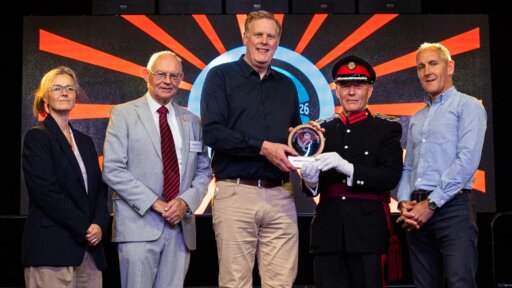
Pictured: Nick Sturge